The story of Nett Front, told by Tünde Bartha-Szell
I grew up among doors. Not in a metaphorical sense, but literally. My father, András, founded Nett Front 18 years ago, and my sister Beatrix and I were already part of the story before we knew what "turnover" meant. We sat in the car with our dolls in our arms while our father negotiated designs, colours, and delivery deadlines. From the back seat we half-heard the conversations and, without meaning to, received our first business lessons before we knew the multiplication table. There I learned that a "yes" said too quickly can become the most expensive word in the world, and that a promise kept on time is the best advertising there is.
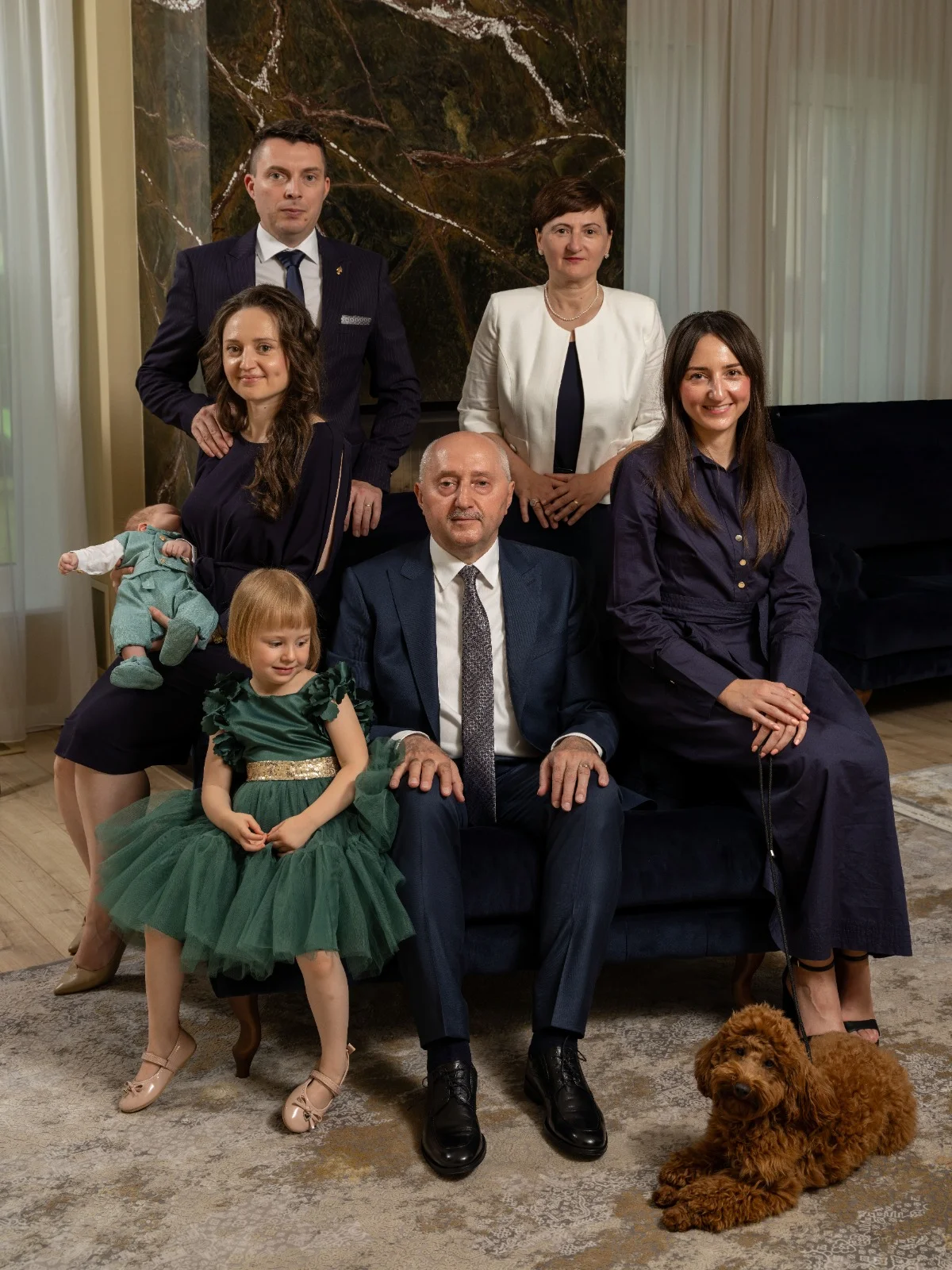
In our family, the question was never "will you join the business?", but "when and how?". I found myself already part of it. At first it was the sense of belonging that drew me in: it was "ours," something you do not just exploit but also develop. Today I am about to become CEO; I work on processes, on strategic projects, and on what I call the "professionalization" of the company. There are four of us on the front line: my mother, my father, Beatrix, and Attila, my husband. My father makes the big decisions; I bring more and more initiatives; Attila innovates on the product side; Beatrix, after years of experience in marketing, is the creative director of REFRONT, our new line, where we sell doors compatible with IKEA furniture online.
Our values are simple and non-negotiable: integrity toward people, suppliers, and the state. We pay on time, we promise only what we can honour, we keep our word. It is the invisible structure on which we build in plain sight.
But it is not all like in the magazines. The hardest moments for me are not the crises in the market, but the meetings where Beatrix and Attila do not see eye to eye. In two seconds I become sister, wife, and colleague all at once. I do not like being "in the middle," but I have learned that "middle" can also mean "bridge": to turn differences into paths the team can safely cross when a conflict arises. To listen all the way through, to separate the person from the problem, to call things by their name without wounding. Here, something unexpected helped me: the fact that I come from an artistic background.
My core training was in art. I graduated from the Faculty of Arts, fell in love with land art and installations, works placed in nature or in sterile spaces, which live through the message they convey and through their interaction with the public. Later, I understood that a healthy business is also an installation: it has a concept, it has materials, it has space, it has a public, and, above all, it has intention. Creativity without structure is beautiful poetry that does not move mountains; structure without creativity is a wall without windows. That is how the idea of a "flexible system" came to me: to blend freedom with discipline, intuition with KPIs, roots with innovation. Today, that is what my work consists of: making room for both.
I remember my first "official" day at Nett Front. I was in Mr. Bartha's office, that is, my father's. In ten minutes he gave me my initiation: "See the laptop? From today it is ours. Here are the emails. We read them daily. We discuss who we reply to and what we delegate. These are the key people. Stay close to me. Watch everything. Once you see how things work, you will know what to do." It sounds simple, but there I actually received my licence in the management of observation. From that day on, I got used to listening one more time before speaking, to asking one extra question, to seeing the whole picture before sketching a detail.
Then came one of my first CEO moments, even though I did not yet hold the title. It was not yet clear from the data, but I sensed, based on facts, not on instinct, that the key person in a crucial department was not right for the next stage. The numbers did not yet reflect that we had a problem, the team was sceptical. I took it upon myself to make the argument, to persuade, and, in the end, to make the change. Today we know it is one of the decisions that kept us from a major derailment. The lesson I took away was this: in families, loyalty is a virtue, but in business, loyalty without standards becomes a risk. Standards protect loyalty from itself.
In our family there are also stories that keep our spirits up. One of them is the legend of the "yellow kitchen": my father always said he loved selling yellow kitchens. When we launched REFRONT, the very first order was in the colour... yellow. We all laughed. Beyond the fun of it, for me it was a sign: tradition and the future can wear the same colour.
As for succession, in our family there were no years of formal negotiation. My father always said: "I do everything for you." I received this responsibility with joy, but also with the weight that came bundled with it. Two years ago, our advisor said that I have everything it takes to become CEO. It was a moment of recognition that moved me and gave me a sense of responsibility. I want to honour the trust of my father, of my family, and of the people who make their living from the work of this company.
The truth is that "becoming CEO," and that is exactly what it is, a becoming, something that involves a long journey, describes the process better than a brief announcement. It is not an appointment to a position, it is a whole stage of maturing. On some nights, I think about what this role entails. What concerns me most is not "being CEO," but staying myself while I carry out this role: not letting myself become identified with the position, but letting it amplify my essence. To be able to be, at the same time, mother, wife, daughter, sister, colleague, and CEO, without betraying any of these identities. My children understood quickly: if I come home smiling, the place where I work is a healthy one. I want them one day to wish, perhaps, to enter the same state of mind, not necessarily the same role.
My father and I are much alike, but we are not entirely the same. That is good: new generations should not be identical to those before them, but rather a kind of successive chapters of the same book. The most tense conversations have to do with money, how much we invest, where we accelerate, where we hit the brakes. I tend to bring calm to discussions, but I do not stay silent. I have learned to say what I think, in a tone that encourages dialogue. Constructive conversations did not begin at the office, but at the lunch table. There, since my adolescence, I would ask questions, and my parents would answer seriously. By the time I reached the meeting room, the dynamic was already rehearsed. Their trust gave me legitimacy in the eyes of the team.